When a truck starts throwing a wrench light and dropping into limp mode, most owners do the reasonable thing: they take it somewhere with the name and resources to back it up, whether that’s a big general shop or the dealership. Somewhere that looks like it should have the answer. But size and reputation don’t always translate into a fix, especially on today’s diesel drivetrains, where a symptom can have more than one plausible cause and a shallow diagnostic just resets the clock on the same failure.
The Story
One customer’s 2005 Ford F-350 XLT (6.0L Power Stroke) kept tripping the wrench light and going into limp mode. His first stop was a general automotive shop, which charged a couple thousand dollars for a repair that lasted about 50 miles before the same light came back on. Next, he tried the dealership, expecting the deeper resources and factory training to settle it. Four weeks later, the truck had only had an oil change, no real diagnostic work, and he was handed a bill for over $1,000 without an answer. He brought it to us next. We had the truck in, diagnosed, repaired, and back on the road within two and a half weeks.
Why “Bigger” Doesn’t Mean “Better” Diagnosis
It’s a natural assumption: a bigger shop or a dealership must have better diagnostic capability, simply because they have more staff, more bays, or a factory badge on the sign. In practice, diagnostic quality tracks something different: how much hands-on time a technician has spent chasing down this exact problem on this exact platform. A dealership’s technicians are trained broadly across an entire manufacturer’s lineup. A general shop sees a little of everything. Neither setup guarantees deep, repeated exposure to one specific engine family’s quirks, and a recurring wrench light on a 6.0L Power Stroke is exactly the kind of problem that punishes a generic approach.
What Real Diagnostic Experience Looks Like
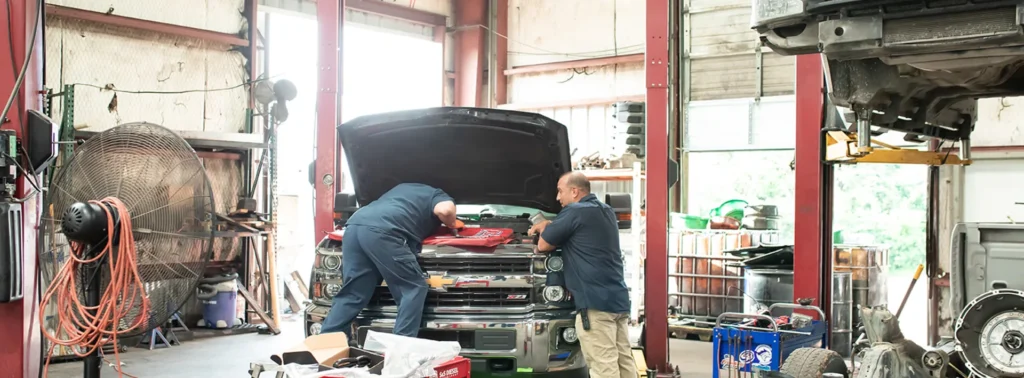
What found this problem wasn’t a bigger shop. It was a more specific one. We work on 6.0L Power Stroke diesels constantly, to the point that our own shop truck is the same year, make, and model as the one that came through our bay. That kind of repetition builds a working knowledge of how these trucks fail that’s hard to get any other way. When a wrench light and limp mode keep recurring after a supposed fix, that’s a signal to dig deeper rather than repeat a surface-level service. In this case, the real cause was a plugged, leaking oil cooler letting oil seep into the cooling system, quietly preventing the oil from being properly cooled under load.
The Takeaway
If your truck has already been “fixed” once or twice and the same warning light keeps coming back, that’s not necessarily a sign you need a bigger shop. It’s a sign you need a more specific one. Experience with your exact platform, not just a name on the building, is what turns a repeat visit into a last visit. If you’re dealing with a recurring wrench light, limp mode, or a problem that keeps “getting fixed” without staying fixed, bring it in and let’s find out what’s going on.